


Understanding Yellow Jackets: A Guide for Homeowners and Businesses

Updated: Oct 6
The Social Structure of Yellow Jackets
Yellow jackets belong to a group of social wasps that live in colonies. A colony operates like a tightly managed seasonal community. Each insect has a role, and the colony changes as the year progresses.
Most colonies begin in spring with a single fertilized queen. She survives winter in a protected place, such as under bark, inside a hollow log, in leaf litter, or near a sheltered structure. When temperatures warm, she searches for a nest site and starts building.
At first, the queen does everything herself. She chews wood fiber, mixes it with saliva, and shapes a small paper-like nest. She lays the first eggs, feeds the larvae, and protects the young. When the first adult workers emerge, they take over daily labor.
From that point, the colony expands quickly.
The Role of the Queen
The queen’s main job is reproduction. Early in the season, she lays eggs that develop into workers. Later, when the colony is mature, she produces reproductive males and new queens.
The queen usually stays inside the nest after the first workers emerge. She depends on them for food, nest maintenance, and defense.
The Workers' Responsibilities
Worker yellow jackets are sterile females. They do nearly every visible task around the nest. They:
Hunt insects and other small prey
Scavenge meat, sugary foods, and carrion
Feed larvae
Expand and repair the nest
Defend the colony
Regulate nest conditions when needed
Workers are the yellow jackets people most often see. If one lands near a burger, fruit bowl, trash can, or hummingbird feeder, it is usually a worker searching for food.
Males and New Queens
As the colony reaches its peak, it shifts from growth to reproduction. Males and new queens leave the nest to mate. The old colony then declines as cold weather arrives.
In most temperate parts of the United States, worker yellow jackets and old queens die off in winter. Newly mated queens survive and begin the cycle again the following spring.
Social Behavior and Survival
Yellow jacket colonies may seem chaotic from the outside, but their behavior is shaped by simple colony needs: food, shelter, reproduction, and defense.
Inside the nest, workers communicate through contact, scent, movement, and behavior. They do not plan like humans do, but the colony reacts as a group. If food is abundant, more workers may forage. If the nest is disturbed, defenders respond quickly.
This social system explains why yellow jackets can seem bold. An individual worker may take risks because the colony benefits. A worker that finds food can return again and again. A worker that defends the nest protects the queen, brood, and future reproductive yellow jackets.
Defense Mechanisms
Yellow jackets are usually most aggressive when they think the nest is threatened. A single forager near food may be persistent, but a colony near its entrance can respond with many stinging workers.
Unlike honey bees, yellow jackets can sting more than once. Their stingers are smooth enough to withdraw after a sting, which allows repeated defense.
Nest defense can be triggered by:
Vibrations from mowing or trimming
Footsteps near an underground nest
People moving logs, brush, or stored items
Pets digging near an entrance hole
Swatting or crushing workers near the nest
A yellow jacket away from the nest is usually focused on food. A yellow jacket at the nest entrance is part of a security force.
Foraging Habits Throughout the Seasons
Yellow jackets are flexible foragers. They hunt, scavenge, and collect sugar depending on what the colony needs.
In spring and early summer, colonies are growing. Larvae need protein, so workers hunt live prey and collect bits of meat. Caterpillars, flies, beetle larvae, and other insects may become food for developing young.
Adult workers also need energy, which they get from sugary liquids. Flower nectar, fruit juices, tree sap, and honeydew from aphids can all attract them.
As summer turns to fall, foraging often becomes more noticeable around people. There are several reasons for this.
Protein Needs for Larvae
Yellow jackets are capable predators. They catch soft-bodied insects and chew prey into small pieces for larvae. This makes them valuable in gardens and natural areas because they help control populations of many insects.
They also scavenge protein. That is why cooked meat, pet food, fish scraps, and open garbage can attract them. A worker does not see a picnic as a social event; it sees a rich food source.
The Sugar Craving
Adult yellow jackets feed heavily on sugar. As the season changes and natural nectar sources decline, they may turn to ripe fruit, spilled soda, juice boxes, ice cream, pastries, and other sweet foods.
This is one reason fall encounters can feel more intense. Colonies are large, workers are numerous, and easy food sources around humans become harder to ignore.
Memory for Food Locations
Yellow jackets can return to a productive food source. If a trash can, compost bin, or outdoor dining area offers reliable food, foragers may keep coming back.
That behavior can look personal, but it is not. They are not targeting people. They are responding to scent, sugar, protein, and opportunity.
Nesting Preferences of Yellow Jackets
Yellow jackets build nests from paper-like material. Workers make this material by chewing weathered wood fibers and mixing them with saliva. The finished nest has a layered, papery texture and often contains combs inside a protective envelope.
Different species choose different nest sites, but they tend to favor places that offer protection.
Common nest locations include:
Abandoned rodent burrows
Hollow logs
Wall voids
Attics or crawl spaces
Tree cavities
Dense shrubs
Under decks or porches
Stored items in sheds or garages
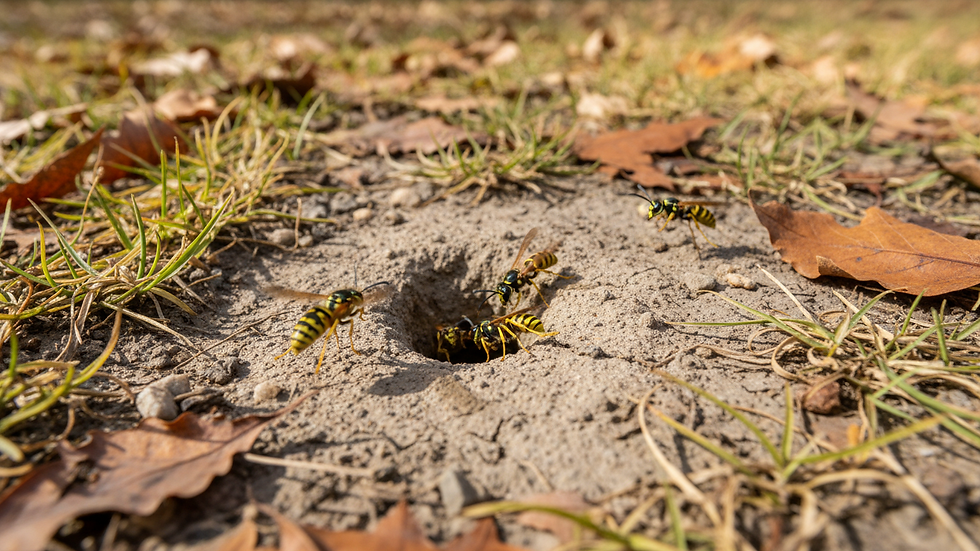
Ground nests are especially easy to miss. A small hole in the lawn may be the only visible sign. Workers may fly in and out in a steady pattern, especially during warm parts of the day.
Surprising Ground Nests
Many painful encounters happen when someone unknowingly disturbs a nest. Lawn mowing, gardening, raking, or stepping near an entrance can trigger defense. The vibration and movement can alert workers before a person notices anything is wrong.
If yellow jackets repeatedly fly from one spot in the ground, wall, or shrub, give the area space. Watch from a safe distance and avoid blocking the entrance.
Aerial Nests
Some related social wasps build visible aerial nests, but many yellow jacket nests remain hidden. When a nest is visible, it may appear as a gray or tan paper structure with an entrance hole.
Do not assume a small visible nest is harmless. A mature colony can hold many workers, and the nest may extend deeper than it appears.

The Ecological Role of Yellow Jackets
Yellow jackets may be unwelcome at cookouts, but they are not villains. They fill several ecological roles.
They are predators, feeding developing larvae with insects and other small arthropods. In gardens, forests, and fields, this can help keep some pest populations in check.
They are also scavengers. By feeding on carrion and food scraps, they help break down organic matter. This cleanup role is less charming than pollination, but it matters.
Yellow jackets can also contribute to pollination, though they are not as specialized as bees. As they visit flowers for nectar, they may carry pollen from bloom to bloom. Their smooth bodies do not collect pollen as efficiently as fuzzy bees, but they still take part in the movement of pollen in some settings.
The ecosystem view does not erase the risk of stings. It adds context. A yellow jacket is not simply a pest. It is a native or established social insect doing what its colony needs to survive.
Human Interactions with Yellow Jackets
Many conflicts between people and yellow jackets happen because both sides are reacting quickly.
People see a stinging insect near food and panic. Yellow jackets sense motion, scent, or a threat near the nest and respond. Swatting makes the moment worse because sudden movement can trigger defensive behavior.
Outdoor eating creates perfect conditions for encounters. Sweet drinks, grilled meat, fruit, open trash, and sticky spills all send strong food signals. A single worker may investigate first. If food remains available, more may appear.
Increased Encounters in Late Summer and Fall
By late summer, many colonies are at or near their largest size. More workers are outside foraging, and natural food patterns are shifting. This makes yellow jackets more visible around homes, parks, campgrounds, orchards, and outdoor events.
At the same time, the colony’s life cycle is changing. As reproductive yellow jackets develop and the old colony starts to decline, workers may seem more persistent around sugar sources.
They are not “getting mean” for no reason. Their colony is crowded, food needs are changing, and easy meals are attractive.
Common Misconceptions About Yellow Jackets
Yellow jackets have a reputation that mixes truth with misunderstanding. Clearing up a few myths can make outdoor encounters easier to handle.
Misconception | What is usually true |
All yellow and black insects are yellow jackets. | Bees, hornets, paper wasps, hoverflies, and yellow jackets can look similar at a glance. |
Yellow jackets sting for no reason. | They usually sting when defending a nest, trapped, crushed, or strongly provoked. |
A forager near food means a nest is nearby. | It may have flown in from some distance to investigate a food source. |
Yellow jackets serve no purpose. | They prey on insects, scavenge organic material, and may help pollinate some plants. |
Swatting is the best way to drive one away. | Swatting often increases agitation and can lead to stings. |
One of the biggest misunderstandings is the difference between a curious forager and a defensive colony. A lone yellow jacket circling a drink is a nuisance. A nest under a deck or in the ground is a real hazard if disturbed.
Safety Tips for Dealing with Yellow Jackets
Safety starts with calm behavior and good prevention. The goal is to reduce attraction, avoid nest disturbance, and know when to get help.
Around Food and Drinks
Keep outdoor meals tidy and covered when possible. Yellow jackets respond strongly to scent, so small habits can make a difference.
Useful steps include:
Keep trash cans tightly closed
Rinse recyclables before storage
Cover sweet drinks between sips
Use clear cups when drinking outdoors so insects are visible
Clean spills quickly
Put away pet food after pets finish eating
Cover meat and fruit until serving
If a yellow jacket lands nearby, stay still or move away slowly. Blowing gently can sometimes encourage it to move, but avoid frantic waving.
Around Nests
Never poke, flood, burn, or seal an active nest entrance without a safe plan. These actions can drive workers out fast and increase sting risk. Sealing an entrance in a wall can also push yellow jackets indoors as they search for another exit.
Give suspected nests plenty of space. Mark the area from a distance if needed so others avoid it. Keep children and pets away.
Call a qualified pest professional if a nest is near a doorway, play area, deck, walkway, or other high-traffic spot. Professional help is also wise for nests in walls, attics, or hard-to-reach places.
If Yellow Jackets Become Defensive
If several yellow jackets start flying at you or stinging, leave the area quickly. Move in a straight line away from the nest. Protect your face as best you can and get indoors or into a vehicle if possible.
Do not jump into water. Yellow jackets may wait near the surface, and water creates new risks.
After a sting, wash the area with soap and water. A cold pack may help with swelling. People with known sting allergies should follow their medical plan and seek emergency care when needed. Anyone experiencing trouble breathing, swelling of the throat or tongue, dizziness, or widespread hives after a sting needs urgent medical attention.

Observing Yellow Jackets Safely
Yellow jackets are fascinating when watched safely. Their flight paths, nest traffic, and foraging choices reveal a lot about colony life.
Stay several yards from any suspected nest and watch from the side rather than standing in front of the entrance. Look for repeated flight patterns. Workers often travel in a steady stream when a nest is active.
When observing foragers, notice what attracts them. Are they visiting flowers, ripe fruit, spilled soda, or meat scraps? Their choices often reflect the season and the colony’s needs.
A simple rule helps: watch behavior, do not interfere with it. Curiosity is safe when paired with distance and calm movement.
The Takeaway on Yellow Jacket Behavior
Yellow jackets are social insects with a strong seasonal rhythm. A queen starts the colony in spring. Workers expand the nest, hunt prey, gather sugar, and defend the brood. By late summer and fall, colony size and food pressure bring them into more contact with people.
Their behavior makes more sense when seen through the needs of the colony. Foraging yellow jackets are looking for protein and sugar. Nest defenders are protecting the queen and developing young. Neither is acting out of spite.
Respect is the best approach. Keep food covered, manage trash well, avoid sudden swatting, and give nests plenty of space. With a little knowledge, yellow jackets become less mysterious and easier to live around, even when they are still best admired from a safe distance.


Comments